
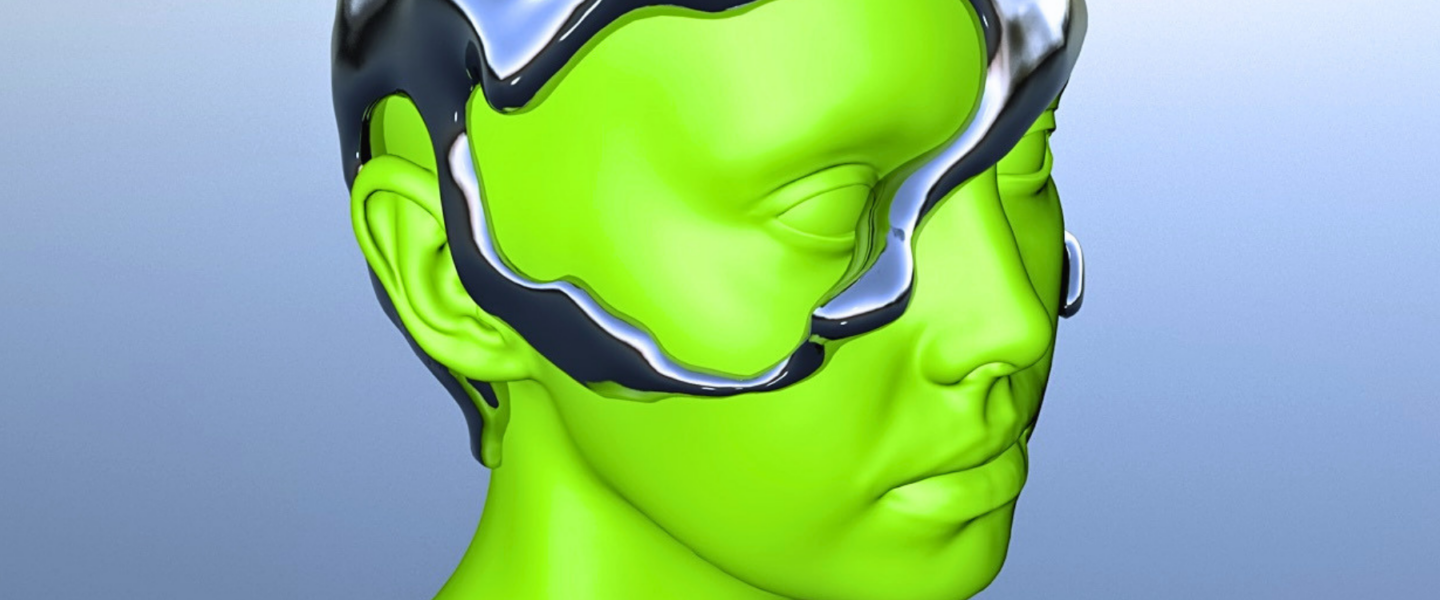
On 25 September 2026 at 14:00, Sofja Hallik, a doctoral student in Art and Design at the Estonian Academy of Arts, will defend her doctoral thesis “Crafting Touch: Physical and Digital Approaches in Jewellery”. The public defence will take place at EKA (Põhja pst 7), room A101, and everyone interested is welcome to attend. The defence will be held in English.
What happens to craft when the hand is no longer the only maker? Jewellery has traditionally involved a very direct relationship between the hand, the tool and the material. 3D modelling, 3D printing and artificial intelligence have introduced a new participant into this relationship, changing how we understand touch, embodied skill and authorship.
Artist and jewellery maker Sofja Hallik explores these questions in her doctoral thesis, which examines the impact of digital technologies on contemporary jewellery practice. Developed over approximately ten years, the research spans a period in which digital tools have become increasingly commonplace in creative practice while also gaining greater autonomy.
Hallik’s practice-based research focuses on three modes of making: hand-work, hybrid processes and machine-mediated making. Through three jewellery collections and the exhibitions associated with them, she examines how the relationships between the artist’s hand, tools and materials change.
One of the central conclusions of the thesis is that digital and manual processes should not be seen as opposites. Digital technologies do not replace traditional craft but change the conditions of making, opening up new possibilities for experimentation, complexity and precision. Hybrid making thus emerges as a practice in which manual and digital processes continuously influence one another.
Touch, too, does not disappear from the digital process. Although direct contact with the material may decrease, the artist’s embodied and tacit knowledge continues to inform digital decisions through parameters, commands, choices and adjustments. Hallik expands the understanding of touch through the concepts of digital touch and speculative tactility.
Another important question concerns who – or what – is actually doing the making. Hallik distinguishes between three possible roles of the tool: tool as tool, tool as partner and tool as creator. As technological intervention increases, the tool may move from simply carrying out the artist’s intentions towards actively influencing or even generating form. The artist does not disappear from the process, but authorship may shift from individual to shared authorship.
The rapid development of artificial intelligence and generative systems is making these questions increasingly relevant beyond the field of jewellery. Hallik’s research therefore asks more broadly what craft, touch and artistic authorship mean when the creative process increasingly takes place through collaboration between human, material and technology.
Supervisors:
Prof Kadri Mälk (Estonian Academy of Arts)
Dr Jaak Tomberg (University of Tartu)
Prof Nithikul Nimkulrat (OCAD University)
Pre-reviewers:
Dr Katharina Vones (Royal College of Art)
Dr Roberta Bernabei (Loughborough University)
Opponent:
Dr Roberta Bernabei (Loughborough University)
The doctoral thesis is available in the EKA digital repository.